- Bartenders quite often have the draught tap either touch the inside of the glass or actually touch the beer. Do they not realize the bacteria from the air, and the fact that beer is food, is totally unhygienic?;
- Beer is poured too quickly and the foam head dissipates before it can be delivered to the table. The methods for correcting this are as follows: the server stirs the beer to create foam while removing the majority of the carbonation (guest gets a beautiful but flat beer) or; the bartender either tops up the beer or jiggles the handle to add a little foam (guest gets a beautiful but over-carbonated beer — perhaps creating a feeling of fullness and gassiness);
- Beer is being over-poured because of too much foam or beer is coming out too quickly. Much of this can be corrected by actually watching the flow of the beer as it is poured. The rest is a system problem that originates in the cooler.
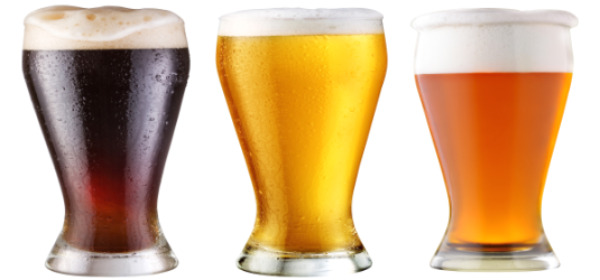
Please consider the following: 1. It is acceptable to pour with at least three ounces of foam on a beer. For example, a 20-ounce glass should have 17 ounces of beer and three ounces of foam. If you look closely at many of the branded glasses, they will have pour lines on the back that are roughly three ounces. 2. Beer with foam has the following benefits: - It is much more appealing;
- Foam allows the aromas to be delivered to the guest;
- Foam protects beer from oxygen preventing it from going flat and stale;
- Foam allows some carbonation to be released while keeping a good portion under the head, keeping the beer “alive” longer;
- Profit.
3. Assuming that a licensee goes through one domestic keg a week for a 50-week period, the amount of profit on changing the pour from 20 ounces to 17 ounces is approximately $5,000. 4. Even if you are pouring properly, think about the waste that comes from beer being poured too quickly or from a system that generates too much foam. All of these little things add up to thousands of dollars in wasted profits. Let’s all work together to provide a great draught experience while increasing the profitability of the industry. Cheers.
About the author:  Roger Mittag, currently a Professor at Humber College’s renowned School of Hospitality, is also the founder of Canada’s leading beer education company, Thirst For Knowledge. He has been bringing his beer appreciation tips to Canadians since 1997 through a series of tasting seminars, beer dinners and educational events. He is a consultant to several Canadian breweries bringing his extensive beer industry knowledge and enthusiastic approach to their sales and marketing teams. He has recently created Prud’homme Beer Certification, a sommelier style program for beer and the first such program in Canada. Roger also owns and operates, The Beer School, which offers beer courses to consumers. Roger Mittag, the Professor of Beer, can be found at www.thirstforknowledge.ca
|