By Fahad Javaid
Restaurateurs know the importance of having the right cooling equipment to meet customer demands and ensure the safety and satisfaction of their products. However, choosing a suitable commercial cooler and freezer for your needs can be daunting. Large equipment is a large investment, so it requires some pre-purchase research. Knowing which commercial cooling equipment is available and the key features to consider will help you decide on what makes the most sense for your restaurant.
Reach-in model: The first type of refrigeration is the reach-in model, which is an excellent starting point for any business. These are free-standing units with either one swing door or French doors. You can opt for a stainless-steel finish or a glass window door to view the fridge contents easily. The latter is commonly used in customer-facing refrigeration and behind-service counters that offer “grab-and-go” items. If you need easily accessible merchandising or bar refrigeration, this may be your best option.
Glass door merchandiser coolers: A merchandising cooler is an excellent addition for establishments that serve grocery-style products or take-out food. Most commercial models are equipped with LED lighting to illuminate products on display, and you can use strategic product placement to catch the customer’s eye right when they walk in the door or while they are cashing out to increase those last-minute sales. Some units can also be branded with your logo, further enhancing your marketing efforts.
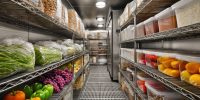
Walk-in coolers: Larger commercial kitchens will likely need extra storage for food and ingredients beyond a reach-in model. You can opt for either a built-in custom model or a prefabricated walk-in offered in standardized size from a manufacturer.
A prefabricated model offers convenience as it can be bought and placed anywhere in your space, is somewhat adaptable to expansion post-installation, and is more affordable. A custom unit may be better suited if you are working with unique sizing or a particularly small kitchen.
The vital components of walk-ins include the panels (made from foam insulation and encapsulated by stainless steel), the doors (most commonly hinged to the unit), and the floors (often insulated for optimal energy efficiency and durability to foot traffic). Floorless walk-ins are also available and somewhat cheaper, but they cannot be insulated to the same degree.
Refrigerated prep tables and display cases: Refrigerated prep tables come in most handy if you serve custom food orders. Additionally, restaurants serving many cold items will benefit from adding cold prep tables to the kitchen line to avoid unnecessary trips to the walk-in cooler. These tables have various compartments to hold all your fresh ingredients and keep them at safe temperatures between 33°F and 41°F.
Food preservation cabinets: Counter-service food establishments may want to consider additional specialized food preservation. Used for maturation, curing and drying cabinets can store cheese and meats that need to be dry-aged for supreme quality. Advanced cabinets will have specialized climate and pH control to regulate the phases of salting, stewing, smoking, drying, curing, air cycling, and recovery mode.
Indoor cultivators: If your menu and service offerings call for fresh ingredients like herbs, consider the possibility of growing greens indoors. An urban glass door cultivator can hold all your microgreen plants, producing less CO2 than traditional commercial gardens. Additionally, investing in a cultivator can save you up to 80 per cent in supply costs in the long run. Features such as LED lighting and automatic watering allow your unit to function and plants to flourish with little oversight from your operations team. These coolers come in countertop and commercial standing sizes, so you can choose the best model for your business.
There are also several different types of freezers to choose from, so consider all options before deciding on the best fit for your business.
Types of freezers
Standing reach-in freezer: Much like standing refrigerators, standing reach-in freezers can help increase your on-the-floor storage for larger establishments. Depending on the size of your business, you may opt for either a single hinge or a French door freezer to fit all of your products. Most stand-alone freezers will have a stainless-steel exterior and interior to help maintain the low temperature.
Chest Freezer: Chest freezers are another consideration for extra storage that is especially helpful for smaller establishments. Depending on the space and products sold, they can be much more cost-effective solutions for increasing your freezer capacity. Additionally, a chest-style display freezer is especially suitable for ice cream shops and storefronts that sell frozen items to customers, as it allows them to see the products without constantly opening and closing the unit.
Walk-in freezer: Often, you can invest in a walk-in cooler and freezer combination to have both cooling and freezing capabilities through one unit. High-capacity freezers are essential for many restaurants that require a stock of perishable items to be readily available. Having a bigger freezer capacity can also help you save money by buying ingredients in bulk and keeping them from perishing. A key consideration of walk-in freezers is whether the insulation will keep the products adequately frozen while avoiding high energy costs. Again, it is essential to consider whether a customizable or pre-fabricated unit is best suited for your needs. A pre-fabricated unit with a built-in floor will likely have the most optimal insulation.
Blast chiller: You may consider a blast chiller for optimized food chilling and freezing in your restaurant. These advanced appliances use cooling technology to expedite your food’s chilling and freezing process to reduce temperature, lock in essential nutrients, and limit bacteria growth. This style allows you to preserve food longer, cool dishes faster, enhance food safety, and prevent ice crystals from forming on the food.
Refrigeration for your business
Optimize energy efficiency, price, and size when choosing your commercial refrigeration equipment. Knowing your inventory and keeping in mind growth plans will be crucial in choosing the right equipment. Some other key questions to guide your research and purchase decision include:
- Do I primarily need a fridge, freezer, or both?
- Will the unit be used inside or outside?
- What is the maximum space the unit can occupy, accounting for proper ventilation (at least one inch around the perimeter)?
- Does the equipment I’m considering come with a limited warranty in the case of malfunctions?
- How will the delivery process take place, and is there adequate space in the entrances to avoid damage to the establishment or equipment?
Features to consider
When comparing different equipment, there are a few advanced features to keep in mind. Most advanced fridges and freezers now come with audio-visual protection alarms, which monitor and maintain the safety and integrity of the stored items.
Other energy-saving mechanisms are equally important; look for units with an efficient defrost system, including an evaporator fan motor, to ensure ice blockages do not build up. A digital thermometer is necessary for precise temperature monitoring, while efficient door locks prevent the cooling unit from accidentally remaining open, which is critical during busy service times.
Air curtains can be a practical addition to cooling systems in high-traffic areas. For enhanced temperature control, consider upgrading with features like automatic door systems, vestibule entryways, or revolving doors, especially if your walk-in cooler or freezer is open to customers.
Energy-efficient lighting is another factor. Opt for fridges and freezers with fibre optic and LED lighting systems, as these are the latest in energy efficiency and can optimize your walk-in units. Enhanced insulation is vital for maintaining the desired temperature. Improved gaskets and sealing materials for the ceiling, walls, and floors help sustain the temperature between door openings and closings. Lastly, ensure that the units have ventilated, automatic defrosting systems and can effectively evaporate condensation, which is essential for maintaining a dry, frost-free environment inside the fridge or freezer.
RELATED: How to keep track of your restaurant equipment and inventory
Upgrading and purchasing commercial equipment is a significant yet exciting investment. Ensure you have the right equipment for your needs by evaluating your options, consulting with a professional commercial kitchen consultant, and knowing your needs to ensure you make the right investment.
Fahad Javaid is an accomplished professional with a distinguished career in the Food Equipment Services industry. As the General Manager of Operations at Zanduco, Fahad’s understanding of the intricacies of restaurant and food services, coupled with his passion for innovation, has solidified his reputation as a prominent figure in the field.