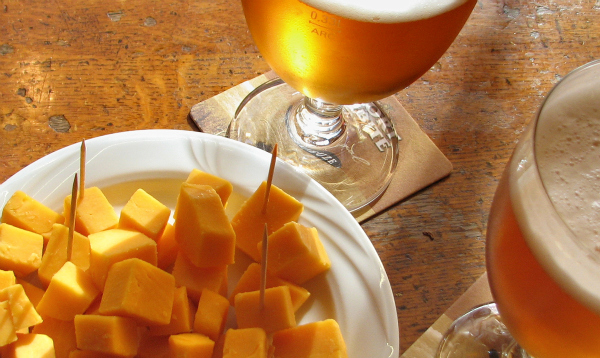
The German version of the wheat beer is slightly different than its Belgian cousin. The German Purity Act does not allow for citrus and spice to be used in brewing. Instead, German brewers must adhere to using malt, hops, yeast and water. These beers are also cloudy but are generally darker in colour (if just marginally). They often feature aromatics that include banana and clove, and are just as refreshing as Belgian Witbiers but with a slightly fuller mouth feel. The same pairing principles used with Witbiers apply to German Weissbiers.Fruit LambicsA Lambic beer is produced in a 500-square-mile-radius around Brussels, Belgium. These unique and historically-accurate beers use natural fermentation procedures. Instead of adding yeast to the fermentation tank, these brewers simply allow nature to do its work and the yeast comes in naturally from the air. Lambic beers are naturally acidic and have characteristics that are more similar to wine than beer. By adding fruit when these beers are aged, the brewer can add another level of flavour and complexity. Fruit Lambics like Kriek (Cherry) are excellent companions to salads, duck and turkey (good to know for the holidays). Strong cheeses like blue work well in contrast to the slight fruit notes in a Kriek. In addition, most of these have corks and make for a unique way to ring in the New Year. Porters and StoutsAs the weather gets colder, we often reach for comfort food. With beer, it’s the same process. We look for darker beers to provide warmth and comfort to our palates. Porters were created in the 1700’s in industrial England. These beers are often reddish brown in colour with flavours leaning toward dark chocolate and coffee. They should be smooth and well balanced. As brewers experimented with these beers, we soon saw stronger, more flavourful versions (Robust Porters or Stout Porters). Eventually, the word Porter was dropped and the style ‘Stout’ was created. Stouts typically are darker in colour (almost black) with tiny hints of ruby red along the edge of the glass. The flavours and aromas are also darker with roasted grain, dark coffee and molasses being on the forefront. Both of these styles need foods that are more robust as a complement. Try these beers with old cheddars and with stews and chili. They are also a perfect match to roast beef and Yorkshire pudding. This short visit of world beer styles should help you to design a great beer and food experience for the holiday season. See also:
About the author: Roger Mittag is the owner of Thirst For Knowledge Inc® (www.thirstforknowledge.ca) and the founder of Prud’homme Beer Certification® (www.tfkbeer.com) and can be reached at [email protected]. | |