By Rebecca Barnatt-Smith
As restaurant technology continues to evolve, today’s tools are helping operators to better manage costs with improved efficiency, organized labour, and seamless guest experiences. While most restaurants have implemented processes for best performance, have you explored alternative strategies that can help you to improve your bottom line while maintaining a high quality of service?
With this in mind, let’s explore four strategies to cut your bill without losing customers in the process:
Fintech reservations
Reservation platforms have evolved in recent years to become a leading resource for online reservations and improving your restaurant’s visibility and accessibility to customers. With a global reach spanning 60,000 restaurants in 80 countries, OpenTable alone seats more than one billion diners each year. In all, the cost of running a platform like OpenTable for your restaurant typically involves an average $1,000 setup and hardware fee, around $200 as a monthly subscription fee, and then between $0.25 and $7.50 per diner per booking reservation fee.
Although these types of reservation platforms may play a key role in securing reservations for your tables, the associated costs can significantly eat into your profit margins.
Financial technology (fintech) offers a great way to make your reservation technology more efficient and tap into a more cost-effective alternative platform that can offer all of your current benefits at a fraction of the cost.
For example, data platforms like Eat App offer full-featured table and reservation management systems alongside customer feedback, marketing, and analytics insights to help democratize your customer data and improve your operational efficiency. Similarly, Allset helps to streamline the dining experience for customers with POS integration and access to marketing insights. Some of these platforms offer subscription fees with lower rates, and some bypass a monthly fee, working with a commission structure and transactional fee, making the platform more lucrative for smaller restaurants.
Contactless dining
Another way of replicating the efficiency of online booking platforms is by improving your payment infrastructure. Mobile wallets have grown in popularity in recent years and the likes of Apple Pay and Google Pay have now become a core facet of a positive customer experience.
Incorporating mobile payment options can help significantly enhance processing restaurant payments while attracting customers who prefer a frictionless dining experience.
By offering more flexible payment choices, you can maximize your reach by attracting customers without having to modernize large portions of your ordering process.
Cost-saving automation
Automation technology can take over manual tasks that often cause staff to spend more time on tasks that don’t necessarily require human intervention.
As an example, managers may have to drop what they’re doing to accept an alcohol delivery, which could then take up more time to manually input line-item invoice details at the restaurant’s back office or accounting system. Instead, adopting automated systems can help make inventory management faster and more cost-effective because it frees staff to spend more time on other essential processes.
Taking this example further, technology can automate alcohol invoice payments with distributors, and integrated services can manage invoice data without any further human entry required. Platforms like Quickbooks, Restaurant365, and Compeat, among other back-office systems, can be significant money-saving tools for restaurants while maintaining – or even improving – the quality of service that keeps customers coming back.
Enhanced analytics
Many restaurants have to constantly monitor important metrics like profit per cover (PPC), and cost of goods (COG) in their bottom line to ensure balanced budgets throughout growth periods and periodical dips in diners.
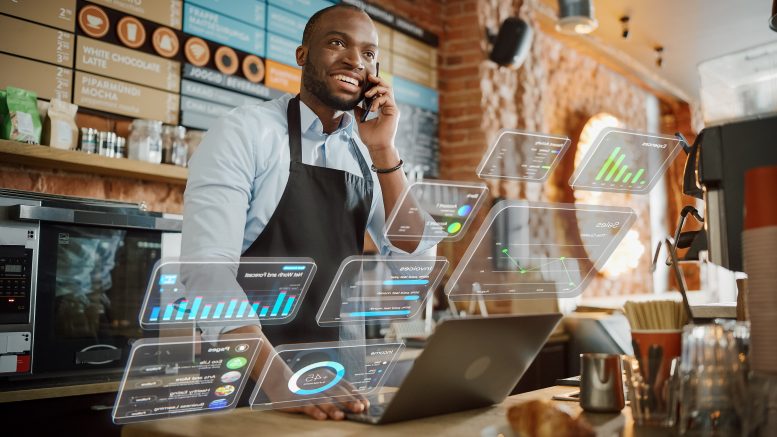
Adopting analytical insights can be a budget-friendly way to maintain your flow of customers without relying on costly platforms, using self-service dashboards to compare performance through departments in a single overview.
With real-time data instantly distributed throughout specific departments or individuals on schedule, every team player can be kept in the loop to stay on top of revenue flow and make adjustments whenever needed.
These insights can help you sell more of your most desirable dishes and identify opportunities for offers and specials you can utilize to maximize the value of your guests. With these data-driven analytics, you can upsell more effectively and upgrade the customer experience alongside your revenue.
Better experience on a budget
Your diners’ experience will always be the most important factor in running a sustainable restaurant. While many platforms offer exceptional tools for driving convenience for your guests, they can come at a significant financial cost to your business.
Fortunately, there are plenty of alternatives that can help make guest visits memorable while protecting your bottom line. At the heart of the next generation of customer experience will be data-driven insights and fintech innovation – and moving to accommodate these technologies today can help your restaurant be better prepared for tomorrow.
Rebecca Barnatt-Smith is a hospitality expert who writes about business growth, customer marketing and tech trends shaping the restaurant industry.