
By Raymond Pan
As 2025 approaches, the global food and beverage industry stands at a daunting crossroads on the quest for greater profitability and sustainable growth. Evolving consumer preferences, dwindling foot traffic, and soaring costs have created a landscape fraught with challenges yet brimming with potential. For FSR and QSR operators, thriving in today’s unpredictable environment demands a commitment to adaptability and forward-thinking modernization, including embracing innovation like robotics and beyond.
“As the pace of change in innovation, consumer preferences, and the economy speeds up, operators that embrace efficiency and value-adding technology, whether in the back office, the order counter, or the dining room floor, are best positioned to flourish.”
—Tony Smith, CEO and co-founder, Restaurant365
With health-conscious dining, organizational costs, and competitiveness mounting worldwide, tools for eateries to modernize include future-ready solutions like automation, IoT devices, and AI software.
The stakes are high – only 38 per cent of restaurants turned a profit in 2023. Other sectors are seeing massive benefits through digital transformation. However, the food and beverage industry has been slower on the uptake, even as research shows that FSRs and QSRs that adopt these technologies will outpace those that don’t.
Menus and cleanliness for health-conscious diners
The growing demand for nutritious, ethically sourced menu items is reshaping the F&B landscape, and plant-based dishes, low-calorie options, and smaller portions are leading the charge.
Sujeet Naik of Coresight Research predicts GLP-1 drugs like Ozempic will further influence dining habits, noting, “This could drive increased demand for menu items that cater to these dietary preferences, such as salads, lean protein sources, and dishes with minimal fats or sugar content.”
But tweaking menus is no small feat. With thinning margins, many operators face steep costs, from sourcing new vendors to discovering which healthy options resonate with patrons. While healthier eating trends are dominating, hygiene remains paramount. 66 per cent of diners avoid establishments with poor hygiene, which vastly eclipses the 16 per cent deterred by slow service.
Automation and the latest technology help restaurants update menus and maintain cleanliness. Service robotics and AI technologies make it easier to afford new products, ensure ingredient transparency, and analyze demand trends.
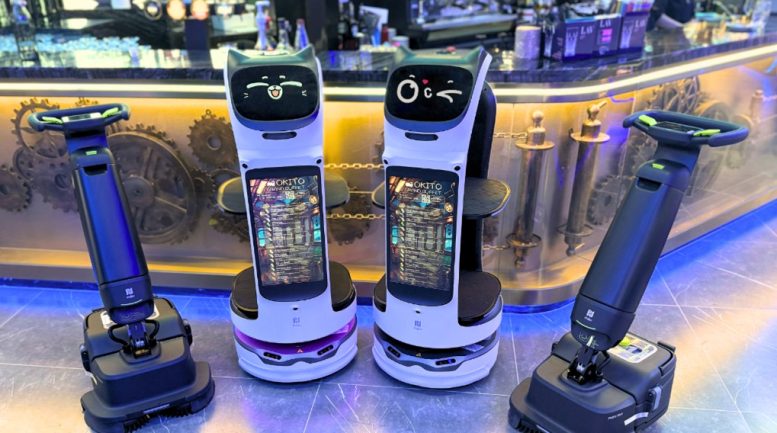
These developments also help restaurateurs maintain spotless spaces. Cutting-edge devices like wireless, agile scrubber-dryers leave floors spotless and dry, removing the need for wet floor signs, while smart HVAC systems enhance air quality.
These technologies emphasize the value of clean, sustainable practices in meeting rising consumer expectations and enhancing brand reputation.
Tackling rising costs with ingenuity
Operators face immense pressure from inflation, with 97 per cent raising menu prices and 98 per cent citing wage inflation as a top concern. Independent eateries, already operating on thin margins, are hit hardest.
Many operators have resorted to cost-cutting measures like cheaper suppliers, smaller portions, reduced hours, or leaner staffing. While these tactics save money, they often come at the expense of diner contentment. In such a fiercely competitive industry, even minor missteps can alienate diners. Staying ahead requires bold, fresh strategies that balance cost control with quality.
Automation and modern technology blend cost management with quality service. Hand-held POS machines streamline diner transactions, while IoT-enabled kitchen assistants and delivery robots increase efficiency.
Kristen Kazarian of Food Engineering explains “Robots, equipped with sophisticated sensors, can mix ingredients to achieve the exact consistency required, ensuring uniform quality across all batches.” Kitchen robotics excel at repetitive tasks, reducing waste, and providing consistent results.
Delivery robots amplify service efficiency and brand reputation. These approachable and practical robots help bus tables and deliver food to help manage restaurant labour. A restaurant founder volunteering in the same study in Cornel Hospitality Quarterly revealed that “While the fast-casual sector typically spends around 20 per cent on ingredients, its use of robotics has allowed it to spend 40 per cent on ingredients, thus providing higher-quality food to its customers.”
With the F&B industry on track to surpass $1 trillion in 2024 according to Forbes, automation has become indispensable for enduring success, streamlining resources, upholding quality, and redirecting staff to more skilled roles.
The foot traffic dilemma: navigating declining visits
Rising costs across industries have compelled patrons to rethink dining out. A Bar and Restaurant survey found that almost 58 per cent of respondents planned to cook at home more often due to price hikes.
PopMenu reports that although 90 per cent of adults still crave dining out, inflation has turned these outings into rare indulgences. Major chains have reported year-over-year traffic declines, with 38 per cent of diners spending the same or more yet receiving less. Tip fatigue further frustrates patrons, who resist tipping 20 per cent for mediocre service. In an oversaturated market, innovation is no longer optional. Nearly 45 per cent of operators anticipate fiercer competition for both patrons and labour, per the National Restaurant Association.
Automation and intelligent technologies are crucial in strengthening performance and diner approval. MasterCard finds that data-driven loyalty programs increase repeat visits by 20 to 30 per cent while Forbes cites that automated marketing systems leveraging consumer insights boost engagement by up to 40 per cent with personalized promotions.
According to GrubTech, automation such as service delivery robots improves order accuracy by 20 per cent and cuts delivery times by 15 per cent. Cleaning robotics also allows staff to focus on meaningful diner interactions, driving satisfaction and loyalty.
RELATED: Hygiene workflow systems can help improve your guest experience
App-based reservation systems reduce errors and simplify operations to confirm bookings more easily. These tools enhance convenience and create memorable experiences that encourage repeat visits.
A roadmap for 2025 success
The foodservice industry teeters on the edge of a seismic shift. To survive economic headwinds and outpace rivals, restaurants must embrace advanced technology, leverage patron insights, and deliver memorable experiences.
The future belongs to those who dare to evolve, offering the service, quality, and personalization modern diners crave. From IoT-enabled devices to AI-driven menu optimization and autonomous robots managing food delivery and cleanup, operators can stand out and grow their competitive advantages.
As General Manager, Americas & Australia, Raymond Pan leads Pudu Robotics’ growth in the Americas and Australia, leveraging deep expertise in automation, global markets, and strategic leadership. Pudu Robotics is a global leader in service robotics, transforming industries with cutting-edge automation and securing nearly 1,000 patents while shipping over 80,000 robots across 60+ countries.
Sources:
- Bray, Ashley.“The Results Are in from Our State of the Industry Survey.” Bar & Restaurant, 22 Feb. 2023, www.barandrestaurant.com/operations/results-are-our-state-industry-survey. Accessed 24 July 2024
- Eversham, Emma. “Restaurant Cleanliness More Important than Customer Service, Finds Report.” Restaurant Online, 26 Apr. 2021, www.restaurantonline.-co.uk/Article/2016/09/12/Restarant-cleanliness-more-important-than-customer-service-finds-report?utm_source=copyright&utm_medium=OnSite&utm_campaign=copyright. Accessed 31 July 2024.
- Grubtech, Team. “The Future of Dining: How Technology Is Shaping the Restaurant Industry.” Blog.grubtech.com, 24 July 2024, blog.grubtech.com/post/the-future-of-dining-how-technology-is-shaping-the-restaurant-industry. Accessed 6 Aug. 2024.
- Hoyles, Jonathan. “Council Post: Technology Fills Service Gaps in the Restaurant and Hospitality Sectors.” Forbes, 10 Mar. 2022, www.forbes.com/sites/forbestechcouncil/2022/03/09/technology-fills-service-gaps-in-the-restaurant-and-hospitality-sectors/. Accessed 17 July 2024.
- Kazarian, Kristen. “Robots Reach for Food Processing | Food Engineering.” Food Engineering Magazine, 18 Apr. 2022, www.foodengineeringmag.com/articles/100208-robots-reach-for-food-processing. Accessed 9 Aug. 2024.
- Keller, Maura. “The Top 4 Challenges Facing Restaurants in 2024.” Bar and Restaurant News, 2 May 2024, www.barandrestaurant.com/operations/restaurant-industry-challenges-2024-and-beyond. Accessed 17 July 2024.
- Kelso, Alicia. “Study: Consumers’ Restaurant Budgets Fell 10% in Two Years.” Nation’s Restaurant News, 13 May 2024, www.nrn.com/consumer-trends/study-consumers-restaurant-budgets-fell-10-two-years. Accessed 8 Aug. 2024.
- National Restaurant Association. “86 Food Waste, Managing Food Waste in Restaurants”. National Restaurant Association WWF, TORK, 2021, https://www.restaurant.org/education-and-resources/resource-library/86-food-waste-engineer-your-menu-to-reduce-waste/. Accessed 3 Dec. 2024
- Restaurant 365, Team. “Annual State of the Restaurant Industry Survey for 2024.” Running Great Restaurants, Restaurant365, 1 Jan. 2024, www.runningrestaurants.com/articles/annual-state-the-restaurant-industry-survey-2024. Accessed 7 Aug. 2024.
- Tussyadiah , Iis P., et al. “Applications and Implications of Service Robots in Hospitality.” Cornell Hospitality Quarterly, vol. 62, no. 2, 25 May 2020, p.193896552092396,https://doi.org/10.1177/1938965520923961.


